

Flanges and Bolts
Flange connections are the most common detachable joint for pipes, pressure vessels and valves. A full flange assembly consis
Flange connections are the most common detachable joint for pipes, pressure vessels and valves. A full flange assembly consists of flange, gasket, bolts and nuts.
Bolts apply uniform clamping force to compress the gasket between two flange faces, creating a sealed joint to prevent medium leakage.
Working Principle
When tightening the bolts, axial preload is generated. This force squeezes the gasket to form a continuous sealing layer between flange sealing surfaces.
• Sufficient bolt preload: keeps gasket compressed and maintains sealing under working pressure & temperature.
• Insufficient preload: leakage may occur.
• Over-tightening: gasket crush or flange deformation.
Bolt Selection for Flange
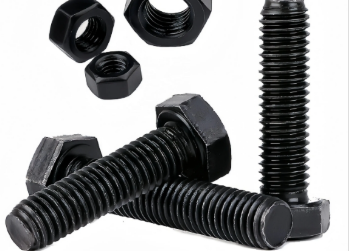
1. Type: Double end studs (stud bolts) are the preferred choice for high-pressure / high-temperature flanges. Hex head bolts are used for low-pressure general flanges.
2. Material: Match bolt material with flange & service environment.
◦ Carbon steel flange: B7 alloy steel studs
◦ Stainless steel flange: A2 / A4 stainless bolts
◦ Corrosive offshore / petrochemical service: Duplex or Super Duplex stainless steel studs (2205, 2507)
3. Strength grade: Higher pressure class flange requires higher strength fasteners.
Key Points for Assembly
1. Tighten bolts in a cross / star sequence to evenly distribute pressure across the flange face, avoid flange warping.
2. Tighten in multiple passes (3~4 stages) step by step, not one-time full torque.
3. For high-temperature service, hot bolting may be required after equipment warming up.
Common Application
Pipeline flanges, pressure vessel nozzles, valve flange ends, heat exchanger connections.
None
Next
Next
None

CONTACT US
Mobile:+86-15622806883
TEL:0531-83238868
FAX:0531-83238868
WhatsApp:+86-15622806883
Email:info@cdfittings.com
Address:No.1, Panlongshan Industrial Park, Puji Street, Zhangqiu District, Jinan City, Shandong Province
ONLINE MESSAGE
Copyright © 2022 Shandong Chengde Metal Fittings Co.,Ltd 鲁ICP备2022025688号